In today’s digital market, relying solely on pay-per-click (PPC) ads can feel like riding a roller coaster. Costs keep climbing while returns diminish. This guide explores how DTC and B2B companies can reduce ad spend and invest in alternatives to PPC that build long-term growth.
We’ll dive into current PPC trends, the pitfalls of over-reliance on ads, and alternatives to PPC tailored to each stage. By the end, you’ll know how to reduce your dependence on paid ads and explore powerful alternatives to PPC that compound over time.
The PPC Landscape: Rising Costs and Saturation
Digital ad costs are surging, making PPC a more expensive game than ever. Recent benchmarks show that average cost-per-click (CPC) rates rose in 86% of industries in 2024, with about a 10% increase on average. In fact, the overall average CPC in 2024 climbed to $4.66 – up from $4.22 the year prior. These increases are driven by a few factors:
- Market saturation and competition: With more businesses bidding on the same keywords, the space has become crowded, driving up CPCs. Even small and mid-sized advertisers are feeling the squeeze, as high bids from deep-pocketed competitors raise the floor for everyone.
- Diminishing returns: While Google Ads still yields an average of ~$2 revenue for every $1 spent (100% ROI) in ideal cases, many marketers find that achieving that ROI is getting harder. Aggressive bidding wars, often fueled by venture-funded “growth at all cost” strategies, inflate CPCs and make profitability elusive. Some brands have seen their customer acquisition costs double from 2019 to 2023, undermining unit economics.
- External factors: Inflation in the broader economy has flowed into ad prices. Privacy changes, like iOS tracking limits, and algorithm updates force advertisers to spend more for the same results. For example, between 2022 and 2023, average CPC rose by 5% and cost-per-lead increased by about 20%.
The net result is that PPC campaigns are becoming pricier and often less effective over time. Click-through rates have improved slightly in some industries. Google Ads averages around 6.4%. But this can be a double-edged sword. Google now places more ads at the top of search results, pulling clicks away from organic links.
Importantly, ROI is shrinking as CPC inflation outpaces conversion gains. PPC experts agree that rising click costs are a major concern for most businesses. The impact is especially hard on small companies.
If you’re an early-stage startup or a smaller firm without a Fortune-500 budget, you’ve likely felt this squeeze. As ad costs rise and returns shrink, smart founders are searching for alternatives to PPC that offer more control and better margins.
The Risks of Over-Relying on PPC
Depending too heavily on PPC for customer acquisition is like building a house on rented land. It might stand for a while, but it’s not truly secure. Here are the key risks and consequences of an over-reliance on PPC:
- Skyrocketing Acquisition Costs: As discussed, ads are getting more expensive. Brands now allocate as much as 35-50% of their marketing budgets to paid ads, yet rising CAC is making this model unsustainable. In one survey, 80% of brands said that climbing customer acquisition costs will significantly impact their business going forward.
If your growth strategy is chained to PPC, you’re vulnerable to these cost spikes. We’ve seen real cautionary tales – for example, Australia’s Temple & Webster ramped up ad spend by 62% in a year but only grew revenue 26%, shrinking their margins. It’s a classic case of diminishing returns. - No Long-Term Value: PPC can drive quick traffic, but it’s transient. The moment you cut the ad budget, the traffic (and leads) disappear. Unlike ads that stop when the budget does, alternatives to PPC keep delivering value — without constant spend.
In other words, PPC is “on-demand” growth, but not compounding growth. This can lead to a growth treadmill where you must spend more and more just to maintain results. - Brand Dilution & Low Loyalty: Over-reliance on paid ads often means under-investment in brand building. Performance marketing alone doesn’t foster brand recognition or trust. Focusing only on conversions via PPC can make brands indistinguishable and erode their identity.
Organic content and storytelling create credibility and customer loyalty that PPC alone cannot. If customers came only through ads, they might not stay. A strong brand connection gives them a reason to return. Remember, a strong brand is a long-term asset that outlasts any one campaign. - Margin Erosion: The math is simple. If CPCs go up and you don’t improve conversion rates or lifetime value, profits per customer will shrink. Bidding wars and algorithm changes can hike your costs without warning, squeezing your profit margins.
Many DTC brands learned this the hard way after 2020. Changes to Facebook, Instagram, and iOS privacy sent acquisition costs soaring. “Brands feel they have little or no choice but to continue spending… The result: brand profits take a hit, and big AdTech amasses more power,” explains Rajesh Jain of Netcore Cloud. - Strategic Inflexibility: f 90% of your leads come from Google or Facebook ads, any shake-up can hit hard. A policy change, algorithm update, or competitor outbidding you may quickly disrupt your pipeline. Over-reliance is risky because it puts your growth outside your direct control. Diversifying means you’re not hostage to a single platform’s whims.
In short, PPC is useful, but relying on it too much can be risky. It leads to high costs, fragile growth, and weak brand loyalty. These risks highlight why businesses need to explore alternatives to PPC, like content, community, and organic SEO.
Next, we’ll look at how to escape this trap at each stage. Build a strong foundation early, balance your tactics during growth, and lock in long-term wins at scale.
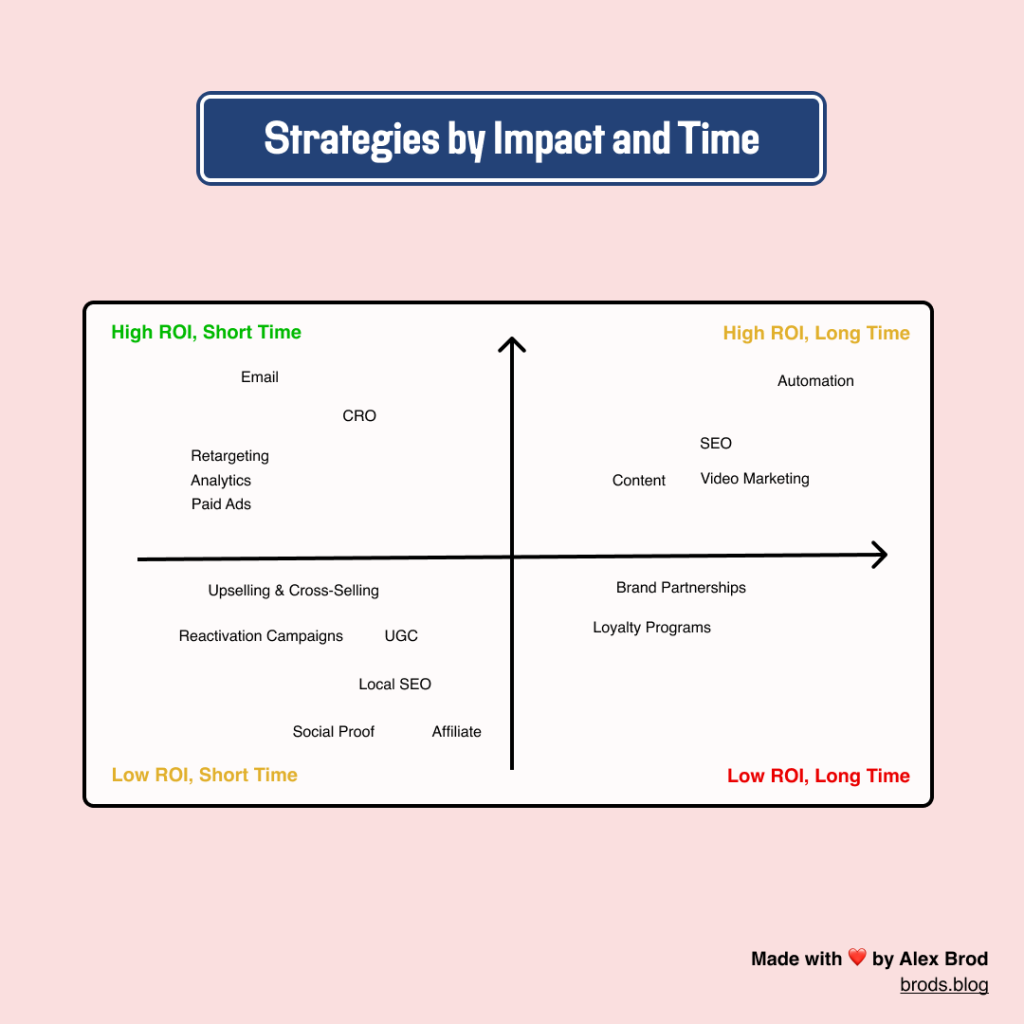
Early-Stage: Beyond “Pay-to-Play” Growth
In the early stage, your time and creativity are more valuable than ad dollars. That’s why alternatives to PPC make more sense. This stage is all about scrappy, smart growth – getting traction while every dollar is precious. PPC can help bring initial traffic, but spending too much early can drain your budget without creating a lasting audience.
In fact, 66% of DTC companies reported that rising customer acquisition costs were their biggest growth challenge. The lesson? In early stages, you need to find alternative, lower-cost ways to acquire and delight your first customers. Here’s how:
Niche Targeting & High Intent
If you do use PPC, be laser-focused. Target niche keywords or audiences where you can get in front of high-intent people with minimal spend. For example, a small DTC apparel brand might skip broad terms like “clothing” and target a niche like “UV-protective hiking shirt.” A B2B SaaS startup could focus on a specific problem keyword their product solves.
By focusing on niche, long-tail keywords, you avoid competing head-on with big players and attract more qualified leads. In short, fish in the smaller ponds where you can actually win.
Invest in Organic Content Early
It’s never too soon to start planting seeds for organic growth. Content and SEO are cost-effective alternatives to PPC that build visibility and trust over time. Create value-packed content that speaks to your target customers’ needs – blog posts, how-to guides, infographics, or short videos.
This not only attracts organic traffic over time but also positions you as an expert. Content marketing is remarkably cost-effective: it costs ~62% less than traditional marketing and generates ~3× more leads. For a cash-strapped startup, that’s a huge win.
An early-stage B2B SaaS company could publish thought-leadership articles or a whitepaper to attract curious potential clients. A DTC brand might start a blog focused on the lifestyle or problem their product solves. This content can be shared on social media and through email to multiply its reach.
Build an Early Community
One of the best assets in early days is a small but passionate group of users or followers. Rather than paying for every click, cultivate word-of-mouth. Encourage early customers to give feedback and spread the word.
DTC founders can leverage personal storytelling on platforms like Instagram or TikTok – sharing the “why” behind the brand to create a human connection. Paid advertising is only as effective as the brand behind it. Brands that differentiate through storytelling stand out.
B2B startups can participate in niche forums (or Slack/LinkedIn groups) where their target audience hangs out, answering questions and subtly building credibility. The goal is to get your first 100 or 1000 true fans through organic hustle. They’ll not only buy, but refer others if you treat them right.
Leverage Influencers & PR
Traditional ads might be out of reach, but early-stage companies can get creative with influencer marketing or PR. For DTC, gifting product to micro-influencers or partnering with a few bloggers/YouTubers can yield content and exposure without a huge price tag.
Because it’s perceived as more authentic, it can drive sales and also contribute to your brand story. For B2B, consider pitching your founders’ story to industry publications or starting a LinkedIn newsletter for your industry. These methods build awareness and trust without needing a big ad budget.
Any press coverage or influencer mention can then be amplified by sharing it on your owned channels (social, email), creating a virtuous cycle of credibility.
Optimize Your Website and UX
Early on, every visitor counts. You may not have hundreds of thousands of visitors yet, but improving conversion rates on the ones you do get is crucial. Ensure your website or app is fast, clear, and user-friendly.
Simple improvements – like clearer calls to action, an easy checkout process, or mobile-friendly design – can make a big difference. For instance, research by Forrester found that a frictionless, well-designed user experience could boost conversion rates up to 400%.
That’s free money in a sense – you’re making more of your existing traffic without paying an extra dime in ads. For a B2B startup, this might mean optimizing your landing page to capture leads (with a compelling offer like a free demo or trial).
For a DTC startup, it could be streamlining the e-commerce checkout or adding persuasive product page content (like reviews, UGC, or a strong guarantee).
Focus on Customer Experience and Retention from Day 1
It’s easier (and cheaper) to keep a customer than find a new one. Even at the early stage, think about the lifecycle. Follow up with every customer: send a thank-you email, ask for feedback or a review, and make them feel valued.
If you can get even a small repeat purchase rate or some referrals, you’re already ahead. B2B startups should personally onboard new clients and give them a stellar experience (this can later be turned into case studies – more content!).
DTC brands might include a personal note in orders or surprise freebies to delight early customers. These gestures build loyalty and turn customers into advocates. Remember, acquiring a new customer can cost 5× to 25× more than retaining an existing one.
So each early customer you retain is budget saved (and a testimonial gained).
Early-Stage Recap (Strategies by Model):
| DTC Startups | B2B Startups |
| Lean heavily on organic social and content | Build trust through content that solves a clear, narrow pain point (blogs, guides, webinars) |
| Share your mission and personal journey to build emotional connection | Participate in niche forums, Slack groups, or LinkedIn communities to build credibility |
| Use micro-influencers or community events to build a tribe around your brand. | Use ultra-specific PPC targeting only if necessary — focus on high-intent keywords |
| Keep PPC spend minimal and targeted to avoid cash burn | Set up a lightweight lead magnet (checklist, whitepaper, template) to grow your list |
| Prioritize engagement with early customers through email and social follow-ups | Personalize every sales/outreach touchpoint — automation comes later |
| Start a blog or content stream around your niche to build organic visibility | Build relationships, not just funnels — referrals often come from early trust |
| Encourage reviews, UGC, and word-of-mouth as early proof of value | Start collecting testimonials or micro-case studies early — they’ll be valuable assets later |
| Offer small incentives (discounts, shoutouts) to reward referrals from early adopters | Create a clear landing page that explains your value prop and offers a simple CTA |
| Capture emails from the start and build a simple newsletter rhythm | Focus on education-first content: explain the problem, not just the product |
| Treat every early customer like a future ambassador — retention matters most now | Think like a helpful peer, not a vendor — your reputation starts here |
By laying this groundwork, early-stage companies create a foundation for growth that isn’t solely reliant on ad spend. Your content starts ranking, your brand story starts resonating, and you have a small army of happy customers. Now you can accelerate into the growth stage with confidence.
Leaning into storytelling and SEO early helps reduce the need for constant paid campaigns and builds strong alternatives to PPC from day one.
Growth-Stage: Accelerating Growth, Keeping it Sustainable
In the growth-stage, you’ve got some traction and likely some revenue coming in (maybe even Series A or B funding if you’re a startup). The temptation here is to pour fuel on the fire – often in the form of ramping up PPC because it’s a quick way to scale.
And yes, growth-stage companies do typically increase marketing spend. But to avoid the growth curve that spikes and then crashes, you need to balance short-term acquisition with long-term foundation-building.
It’s at this stage where the cracks from a pure PPC strategy really start to show – for instance, your cost per acquisition might rise as you exhaust the “low hanging fruit” audience and move to broader targets. Sustainable growth at this stage means diversifying channels, investing in brand and retention, and optimizing for efficiency.
Here’s how to do it:
Maintain a Balanced Marketing Mix
At growth stage, it’s critical to invest not just in “performance marketing” (PPC, direct response ads) but also in brand marketing that will pay off over a longer horizon. Think of performance marketing as picking the fruits in season, and brand marketing as watering the tree for future seasons.
Some experts suggest roughly a 60/40 split – even in early growth, about 57% of budget on brand-building vs 43% on direct response – shifting more toward brand as you mature. The reason? There’s a finite amount of in-market buyers at any given time (maybe only 5–15% of your market is ready to buy now).
To reach the other 85%, you need to stay on their radar until they are ready, which is exactly what brand marketing does. So, growth-stage DTC brands might start doing broader top-of-funnel campaigns (like video ads that tell the brand story, sponsoring a podcast, or PR stunts) rather than just product ads with “Buy Now” buttons.
B2B companies at growth stage ramp up thought leadership – maybe commissioning industry research, speaking at conferences, or running branding ads on LinkedIn about the vision of the company – not to get leads tomorrow, but to plant seeds in executives’ minds.
This doesn’t mean abandoning PPC; it means PPC works alongside these efforts, not alone.
Double-Down on Content and SEO
By now you have more data on what your audience cares about, and likely more resources to create content. Use that! Expand your content marketing program: more in-depth blog posts, comparison guides, videos, infographics – whatever formats work.
If you’re DTC, maybe it’s time to invest in some polished how-to videos or a community blog where customers share stories (UGC). If you’re B2B, perhaps launch a webinar series or a podcast on industry topics.
This content not only drives organic traffic (which by now should be a significant channel), but also helps your PPC – you can use high-performing content pieces as landing pages or lead magnets for ads. In fact, your PPC and SEO should work hand in hand. Analyze which keywords or messages convert well in PPC, and then create organic content around those to capture free traffic too.
This shift back to creative content and brand storytelling mirrors a deeper change in advertising itself — from performance-first to meaning-first. Explore how advertising has evolved and what today’s brands can learn from iconic campaigns.
Many growth-stage companies also start to rank for bigger, competitive SEO terms at this stage, because they’ve built up domain authority through consistent content publishing.
These channels not only grow organic reach, but also serve as powerful alternatives to PPC when scaled properly.
Optimize and Segment Your PPC Efforts
At this stage, you likely are using PPC, but it shouldn’t be brute-force spending. Now is the time to get surgical with your ad strategy. Use conversion rate optimization (CRO) and analytics to squeeze more results out of the spend.
For example, improve your Quality Scores in Google Ads by aligning ad copy and landing pages closely with keywords (to lower CPC), and test different creatives on Facebook to improve click-through and conversion rates. Also, shift more budget to what’s working best – maybe you discover LinkedIn Ads have a crazy high cost per lead, but Reddit ads are gold.
Or that one channel is great for DTC customer acquisition but another yields higher LTV customers. Optimize accordingly. If you find certain PPC campaigns just aren’t profitable, don’t be afraid to cut them and reinvest elsewhere – no more autopilot spending.
Additionally, remarketing should become a staple now: you have a larger audience of past visitors, so use retargeting ads to re-engage them. This is often far cheaper than cold targeting and can boost conversion rates significantly (remarketing can raise conversion rates by as much as 150% in some cases).
For DTC, retarget those who viewed products but didn’t buy (maybe show them user reviews or offer a first-time discount in the ad); for B2B, retarget site visitors with ads about a case study or an upcoming webinar to pull them back in.
Enhance User Experience & Conversion Funnel
Growth stage is also about optimization. You’re getting more traffic now, so small percentage improvements mean a lot. Continuously improve your website/app’s user experience.
Implement A/B testing on key pages to lift conversion rates. Perhaps add live chat or a chatbot to answer customer questions in real-time (improving conversion and customer satisfaction). For e-commerce (DTC), consider upsells/cross-sells and streamline the checkout.
For B2B, improve the signup flow or demo request process. Every extra conversion you eke out is a win that didn’t require more ad spend. Also, consider personalization – e.g., showing relevant content or products to returning visitors based on what they viewed.
Growth-stage companies often start using more sophisticated tools for personalization and CRO as they can justify the investment. The payoff is cumulative: a better UX means higher ROI on all your traffic (paid or organic).
Build a Community & Encourage Advocacy
If early stage was about starting a community, the growth stage is about nurturing and leveraging it. This might be when you formalize a community program: a VIP Facebook group, a customer advisory board, a user forum, or regular meetups/events (virtual or physical) for your customers.
Communities significantly drive retention and repeat business – 70% of marketers believe community-building is important for customer retention, and 73% of consumers are more likely to buy more frequently from brands with strong online communities.
For DTC brands, think of things like referral programs (give incentives for customers to refer friends), loyalty programs, or social media challenges/hashtags that get customers engaging with each other. Example: a DTC fitness brand might have a hashtag that customers use to share progress – creating a peer support loop that the brand facilitates.
For B2B, you might host user groups, customer roundtables, or a Slack community for professionals using your product to swap tips. This not only improves customer satisfaction (they feel part of something), but you’ll also get user-generated content and word-of-mouth that bring in new leads organically.
When customers feel like they’re part of your brand’s story, you don’t have to pay them to spread the word – they do it willingly.
Lifecycle Marketing & Retention
By the growth stage, you hopefully have a growing base of customers – now, make the most of them. It’s far more cost-effective to drive repeat purchases or upsells than to keep finding fresh customers. Implement robust email marketing and other retention tactics.
For DTC, this means segmenting your email list (e.g. VIP customers, lapsed customers, etc.) and sending targeted campaigns: new product announcements, helpful content, or personalized offers. Also consider SMS marketing or a loyalty rewards program if it fits your audience.
For B2B, use email nurturing campaigns to educate users about features they aren’t using, or to cross-sell additional services. Perhaps start a monthly customer newsletter with valuable insights (not just product news, but things that help them do their job/business better – providing value beyond your product).
Companies that excel at retention reap huge benefits: for instance, loyalty program members in the U.S. boost their repeat purchase rate by ~60%. Higher retention means higher customer lifetime value, which in turn means you can afford to spend more to acquire a customer in the first place – taking pressure off your CAC in the long run.
Metric Shift – Focus on LTV, Not Just CAC
In the growth phase, savvy companies start measuring success differently. It’s not just “How many new customers did our ads get?” but “Are we getting the right customers who stick around and are profitable?” Over-reliance on PPC early on can train teams to worship metrics like CAC (customer acquisition cost) and ROAS (return on ad spend) in isolation.
Now’s the time to broaden the view. Look at new customer cohort retention, payback period, and LTV/CAC ratio. Many DTC brands in 2024 began to adopt metrics like nCAC (new CAC) and POAS (profit on ad spend) to ensure they weren’t just buying revenue at slim margins.
B2B firms similarly focus on metrics like pipeline velocity and customer lifetime value from each channel. By shifting the team’s mindset to profitable growth, you naturally make decisions that reduce bad PPC spend (e.g., you’ll cut out campaigns bringing lots of low-LTV customers).
It also justifies those brand and retention investments, because you see the payoff in improved lifetime value.
Growth-Stage Recap
| DTC Startups | B2B Startups |
| Continue using PPC, but optimize for performance — cut underperformers, scale what works | Align marketing and sales teams to support one revenue goal |
| Invest in stronger creative assets (video, UGC, storytelling-driven ads) | Create mid-funnel assets: case studies, competitor comparisons, ROI calculators |
| Launch a full content hub or video series to support organic growth | Increase LinkedIn presence through thought leadership and personal branding |
| Scale influencer partnerships and move beyond one-off posts | Host webinars, workshops, or micro-events for qualified lead generation |
| Explore brand collaborations or co-marketing with aligned companies | Test new paid channels beyond search (e.g. LinkedIn InMail, newsletter sponsorships) |
| Refresh your brand identity or website for stronger differentiation | Implement or expand a customer success program to drive retention and upsells |
| Deliver excellent customer service to drive reviews, retention, and referrals | Build playbooks or resource hubs to educate and nurture prospects |
| Expand into new ad platforms (TikTok, Pinterest, Reddit) but track performance closely | Strengthen CRM and lead nurturing systems (email flows, retargeting) |
| Use retargeting ads to bring back interested shoppers and increase conversion | Create referral and partner programs to reduce reliance on ads |
| Build and segment your email/SMS list to drive more owned channel revenue | Start measuring marketing by customer lifetime value, not just CAC |
The growth stage is a balancing act. You’re pressing the accelerator, but also building better shock absorbers for the bumpy road of scaling. By combining performance tactics with brand and customer experience investments, you ensure that the growth is not only fast but also resilient and efficient.
Strong creative content, influencer collaboration, and community building are excellent alternatives to PPC as you grow.
Scale-Stage: Long-Term Moat and Compounding Growth
Reaching the scale stage (sometimes called the “scale-up” or being a mature company) means you’ve made it past the startup scrappiness and the wild growth spurts – you’re now a more established online business.
At scale, your organic engine should start to outperform your ads. That’s the benefit of building solid alternatives to PPC early on. At this stage, you likely have a substantial customer base, significant revenue, and a recognized brand in your space.
The challenges now are maintaining growth momentum, expanding your market or product lines, and fortifying your moat – the competitive advantages that keep others from eating your lunch.
Sustainable growth at scale is about maximizing lifetime value, deepening customer loyalty, and leveraging your brand equity. PPC will probably always be part of your marketing mix, but by now it should be just one of many channels – and increasingly, your growth comes from organic momentum, word-of-mouth, and brand reputation. Here’s how scale-stage companies can continue to grow sustainably:
Cultivate Brand Advocates and Community at Scale
By now, you might have thousands or millions of customers. It’s time to turn a good chunk of them into raving fans. Community-building evolves at scale into formal programs: ambassador programs, extensive loyalty rewards, user groups, etc.
For DTC brands, you might identify your top 1% customers and give them a platform – maybe a referral code that gives them perks for each friend who buys, or inviting them to co-create a product line (limited edition collaborations).
For B2B, perhaps start an annual user conference (think Salesforce’s Dreamforce or HubSpot’s INBOUND – these are marketing events in disguise that galvanize their user communities). Companies with strong communities enjoy higher retention – 66% of companies say their customer community has helped retention. Additionally, brand community can boost loyalty such that 40%+ of consumers are more likely to stay loyal due to that community engagement.
Essentially, your brand should feel like a club that people want to belong to. At scale, you have the resources to pour into this: dedicated community managers, big loyalty program budgets, and sophisticated referral systems. The ROI might not be immediate in a CPA sense, but it shows up in retention and organic acquisition (the friend-of-a-friend effect).
Optimize Lifetime Value (LTV) with New Offerings
A key growth lever at scale is increasing the value you get from each existing customer. You’ve spent years acquiring them – now make sure you’re meeting more of their needs so they stick around and spend more. This could mean launching new product lines or services that complement your main offering.
DTC example: a company that started by selling one type of food product might expand into related pantry items, so their loyal customers buy a wider range from them (increasing share of wallet).
B2B example: a software company might add new modules or a premium tier so clients can upgrade instead of outgrowing the tool. Marketing-wise, this involves lifecycle campaigns targeting existing customers: upsell emails, customer webinars demonstrating new features, or exclusive early-access offers for loyal customers.
Email, retention, and upsells are often more profitable alternatives to PPC because they monetize existing relationships. It’s far cheaper to sell again to an existing customer than to find a new one. Plus, a customer using multiple products/services from you is deeply ingrained – they are less likely to churn to a competitor. This is how you build a moat.
From the PPC perspective, you might even shift some budget towards re-engaging current customers (e.g., advertising a new product to your customer list), not just constantly chasing new folks.
Broad Reach Branding Initiatives
Scale-stage companies often have the luxury to do marketing that isn’t directly about conversion at all – it’s about mass awareness and brand positioning. This can include broad campaigns like national TV spots, big YouTube ad campaigns, outdoor/billboard advertising, or sponsoring major events.
While these are largely out-of-scope for early startups, they can reinforce your brand at scale and make all your other acquisition easier (including PPC – people are likelier to click an ad from a brand they’ve heard of). The key is to measure what you can (surveys, direct traffic lifts, branded search volume as a proxy for brand interest, etc.) but accept that some brand marketing is about long-term category dominance, not immediate sales.
A strong brand also gives you pricing power – if people trust and love your brand, you aren’t forced to win on discounts or aggressive ad retargeting; you can potentially spend less on PPC because customers come to you directly. One statistic: “Brand search” (people searching your brand name) is often a top traffic driver for established companies, reflecting demand you didn’t have to pay to create.
While not a cited stat above, it’s commonly observed that as brand equity grows, organic and direct traffic grows with it – this is the compounding payoff of years of brand investment.
Constant Experience Optimization (CX/UX)
Large companies can afford to invest heavily in user experience and even innovation in how customers interact with them. This includes not just the website or app UX (which should continuously be tested and refined), but the whole customer experience.
For DTC, this might mean super-fast shipping, hassle-free returns, beautiful packaging – things that make the experience share-worthy and memorable (leading to word-of-mouth).
For B2B, it could mean top-notch customer success services, training resources, and an intuitive product UI that keeps getting better, so clients are delighted. Satisfied customers become brand advocates. Don’t let bureaucracy slow down the hunger for improvement – the big advantage of scale is resources, so channel those into staying top of class in customer experience.
Companies that implement top-tier design practices grow about twice as fast as those that don’t, showing that investing in UX/CX is not just fluff – it drives growth. Also, a frictionless experience means less drop-off, effectively improving conversion rates and retention without extra marketing spend.
Strategic PPC (Protecting Your Turf & Key Campaigns)
By scale stage, you’re not abandoning PPC – you’re just using it smarter. A lot of your new customers might now come organically, but you can use PPC in strategic ways.
For example, bidding on your own brand keywords (to prevent competitors from siphoning those clicks), running campaigns for new product launches or promotions to ensure they get visibility, and highly targeted campaigns for specific segments or geographies you want to grow in.
Also, you’ll likely leverage programmatic advertising and advanced targeting (lookalike audiences, etc.) with the wealth of data you have on your customers. And with bigger budgets, you can negotiate better rates for things like premium placements or direct ad buys. But always watch ROI – the goal is to supplement your organic growth engine, not revert to old habits.
Many mature companies have learned that throwing money at ads isn’t a panacea; efficient growth comes from the blend of strong brand demand and smart advertising.
One encouraging sign: many big DTC brands have actually reduced their ad spend share as they matured. For instance, on average, mature brands might dial down performance marketing to ~30-40% of the mix, with 60-70% on brand/organic, because their brand does more heavy lifting by that point.
Data-Driven Decision Making & Innovation
At scale, you likely have a lot of data. Use it for sustainable growth: identify which customer segments are most profitable and focus on acquiring more like them (maybe your PPC targeting shifts toward demographics or lookalikes of your best customers).
Identify churn risks and address them proactively (marketing isn’t just acquisition, retention campaigns to save at-risk customers are huge at scale; e.g., a win-back email or a special offer can save a relationship that would otherwise be lost).
Continue to experiment with new channels and technologies – even as a big company, maintain a bit of the startup spirit. Maybe that means testing emerging social platforms or investing in SEO for new content formats (like optimizing for voice search or whatever new trend).
Sustainable growth means adapting to changes rather than resting on what used to work. The marketing landscape will keep changing, so large companies need to stay agile – allocate a portion of budget to experimental campaigns or pilot programs (e.g., a pilot community in a new region, a beta of a referral program, etc.).
The difference at scale is you can do this systematically: A/B test with significant sample sizes, run controlled experiments in one region before rolling out globally, etc. Use your scale to your advantage in learning what works best, then double down on winners.
Scale-Stage Recap
| DTC Businesses | B2B Businesses |
| Ensure consistency across all channels (e-commerce, retail, marketplaces, social) | Position yourself as the industry authority through flagship reports and benchmarks |
| Deliver seamless customer experience across online and offline touchpoints | Host executive-level events or invite-only forums to deepen client relationships |
| Use brand equity to launch high-impact partnerships and co-branded campaigns | Launch an academy, certification, or training ecosystem to educate and retain users |
| Use brand equity to launch high-impact partnerships and co-branded campaigns | Run brand-awareness campaigns (e.g. LinkedIn sponsorships, high-funnel content) |
| Scale influencer marketing to larger names or long-term ambassador programs | Protect brand and product terms in PPC and shift focus to account-based marketing |
| Keep a human tone in community management and customer interactions | Use firmographic targeting to reach decision-makers at key accounts |
| Personalize marketing using customer data (e.g. tailored emails, product recommendations) | Support sales teams with advanced tools: playbooks, ROI calculators, competitor teardown assets |
| Expand loyalty and referral programs to drive repeat purchases and organic growth | Create strong customer success programs with measurable business outcomes |
| Invest in brand-level campaigns (TV, outdoor, large-scale video) for mass awareness | Promote advocacy through customer stories, testimonials, and advisory councils |
| Develop customer segmentation for smarter product suggestions and offers | Optimize your onboarding and expansion paths to increase net revenue retention |
| Analyze and grow lifetime value (LTV) through upsells, bundles, and personalized offers |
At scale, the overarching theme is building a self-perpetuating growth machine. Your brand, customers, and community start doing a lot of the work for you – bringing in new customers by reputation and network effects.
Your job in marketing is to nurture that machine (keep customers happy and talking, keep content fresh and valuable, keep the brand in good standing) and strategically use paid channels to nudge it along where needed.
This creates resilience: even if a PPC channel underperforms one quarter, your sales don’t fall off a cliff because you have multiple other pillars holding up growth.
7 Actionable Steps for Founders and Marketing Leads to Reduce PPC Dependence
Regardless of stage, if you recognize that you’ve been too reliant on PPC, here are specific action steps to transition toward a more balanced, long-term growth strategy. These steps will help you gradually reduce dependence on paid acquisition while strengthening other growth drivers:
- Audit your channels
Figure out where your leads come from and what they really cost. Compare CAC and LTV across PPC, organic, referrals, and direct traffic. Use this to identify overspending or low-return channels. - Reallocate budget gradually
Start by shifting 10–20% of ad spend toward content, SEO, or community. Treat this like long-term investment — the returns compound over time. - Clarify your brand story
Define your mission, values, and differentiation. Build messaging that resonates across your site, content, and ads. A strong narrative lowers your need to pay for every new visitor. - Invest in owned media
Focus on channels you control: your website, blog, email list, and community. Start a newsletter. Create value beyond your product to keep attention and build loyalty. - Improve user experience
Fix friction points in your site or onboarding flow. Make it easy to convert, refer, or share. A better CX = better ROI across every channel, paid or organic. - Launch a referral or loyalty program
Encourage word-of-mouth and repeat business. Start simple — discount for referrals or points for repeat purchases. Let your customers do the marketing with you. - Train your team on sustainable growth
Help your team shift focus from short-term wins to long-term strategy. Track KPIs like organic traffic, content performance, and LTV — not just ROAS. Reward experiments and consistency.
By following these steps, you create a roadmap to gradually wean your business off an unhealthy over-reliance on PPC. You’re not eliminating PPC – you’re just putting it in its rightful place as one tool among many.
The transition doesn’t happen overnight, but each step reinforces the next: content brings in SEO traffic, which builds your email list, which you nurture into sales, which gives you more happy customers, who refer friends, who join the community, who generate ideas for more content… and so on.
This is the essence of compounding growth: the outputs of your previous marketing efforts become inputs that drive further growth, without proportional additional spend.
It’s how brands build momentum that carries them forward.
Conclusion: The Long Game Pays Off
Sustainable growth is about playing the long game. Early on, it might seem like the quickest way to get customers is to pay for them – and PPC does have its place in a growth strategy, especially for testing and quick wins.
But as we’ve explored, the most resilient and successful online businesses (DTC or B2B alike) complement their paid acquisition with strong organic and brand engines. They invest in content that educates, experiences that delight, and communities that inspire.
These investments create a moat that a competitor can’t easily replicate just by outspending you on ads.By understanding the current PPC landscape and its pitfalls, and by implementing stage-appropriate strategies (from scrappy early tactics to sophisticated scale techniques), you can reduce your dependence on “renting” customers.
Instead, you’ll be earning and owning your growth. Think of PPC like a catalyst – it can jump-start things, but you don’t want it to be the sole fuel forever. The real fuel is your brand’s relationship with customers.
by
Tags: